Home insurance in Oregon costs about $1,400 a year on average in 2026, with most policies falling between roughly $900 and $2,200 depending on coverage and location, based on published national rate data. That average excludes flood and earthquake damage, which standard policies don't cover and which a large share of Oregon homeowners actually need.
- Home insurance cost oregon averages about $1,400 a year in 2026, well under the roughly $2,500 national average.
- Standard policies exclude flood and earthquake damage, both real risks in Oregon's coastal and Cascadia zones.
- Coastal and wildfire-prone addresses pay more; Portland-metro homes track close to the state average.
- Raising your deductible and comparing multiple carriers are the fastest ways to cut the premium.
- Coverage Lane connects Oregon homeowners with one licensed independent agent to compare real quotes.
Why this matters
Oregon sits well below the national average on home insurance, but that single figure hides a wide spread once wildfire zones, coastal storm exposure and dwelling age enter the picture. A homeowner in inland Salem pays a different premium than one on the coast near Newport, even with identical coverage limits. Coverage Lane connects Oregon homeowners with one licensed independent agent who pulls quotes across carriers instead of guessing at a single average number.
Most of the cost gap between Oregon and the rest of the country comes down to weather. Oregon doesn't face hurricanes or the hail frequency of the Midwest, which keeps the state's baseline home insurance cost lower than the national figure in 2026.
How much does home insurance cost in Oregon in 2026?
Oregon's average of about $1,400 a year covers four coverage elements bundled into a standard policy. The table below shows what each one protects and how it typically moves your premium.
| Coverage element | What it protects | Effect on your premium |
|---|---|---|
| Dwelling coverage | Rebuilding the home itself | Higher rebuild cost drives the premium up |
| Personal property | Belongings inside the home | More coverage adds incrementally to cost |
| Liability | Injury or damage claims against you | Higher limits raise cost modestly |
| Loss of use | Temporary housing after a covered loss | Small effect on the overall premium |
| Deductible | Amount paid before coverage kicks in | Higher deductible lowers the premium |
None of those elements include flood or earthquake coverage. Oregon sits on the Cascadia subduction zone, and standard homeowners policies exclude earthquake damage entirely. Homeowners near the coast, or in older construction anywhere in the state, typically need a separate earthquake endorsement to close that gap in 2026.
Coastal Oregon: higher storm and flood exposure
Homes near the coast from Astoria down to Brookings generally cost more to insure than inland properties. Wind, storm surge and proximity to flood zones push premiums above the state average, and many coastal lenders require a separate flood policy through the National Flood Insurance Program on top of the standard homeowners policy.
Portland metro: pricing close to the state average
Homes across Portland, Salem and the Willamette Valley track close to Oregon's $1,400 average in 2026. Lower storm and flood exposure than the coast keeps rates steady, though older housing stock in some neighborhoods can push premiums up through higher rebuild costs.
Central and Eastern Oregon: lower storm risk, wildfire exposure rising
Cities like Bend and Redmond see less storm and flood risk than western Oregon, which helps hold down the base premium. Wildfire exposure in the surrounding forested and high-desert terrain has pushed some insurers to tighten underwriting in these areas in recent years, which can offset the savings from lower storm risk.
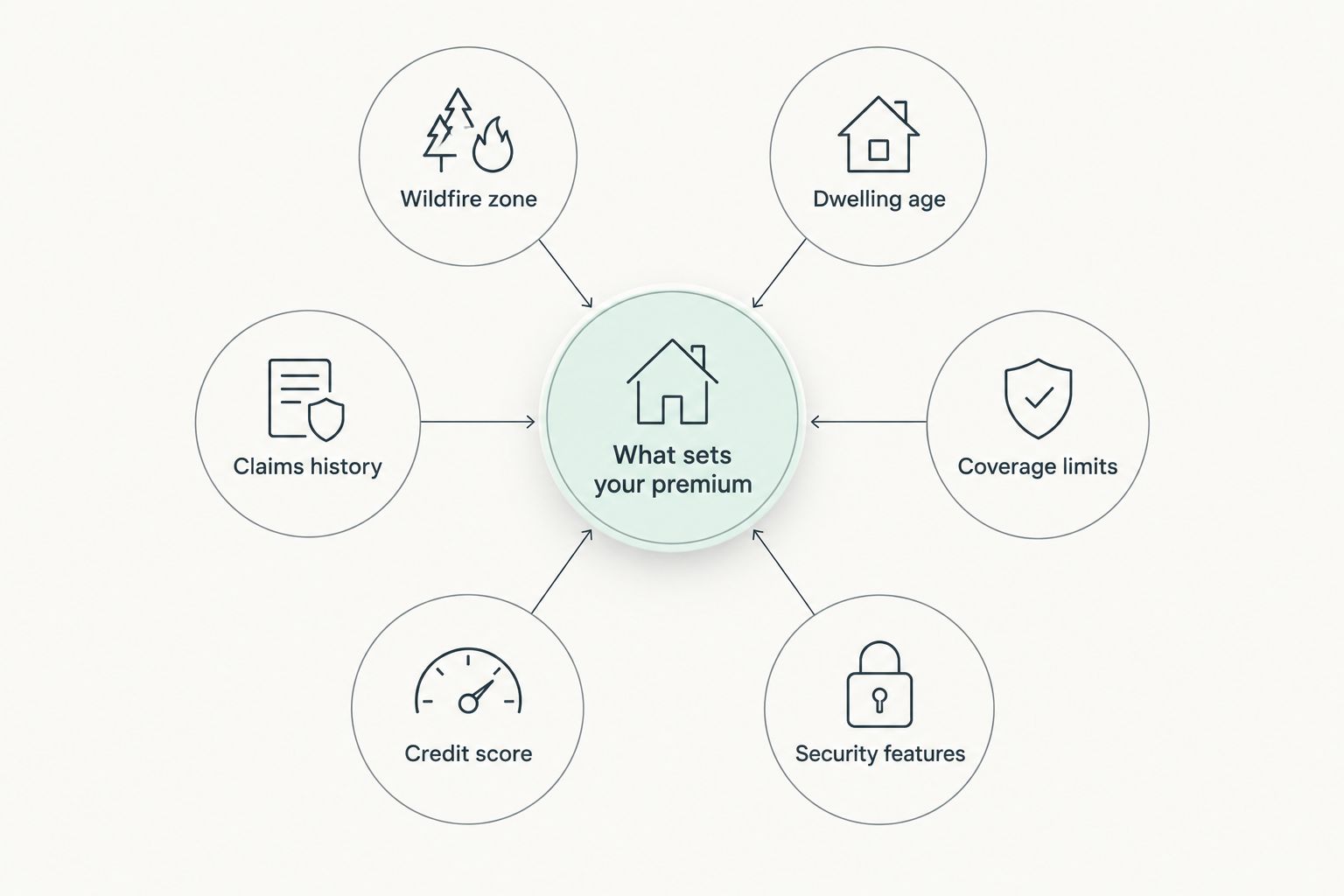
Why home insurance cost in Oregon varies
- Location and wildfire zone — proximity to forested or high-desert terrain raises risk models
- Dwelling age and construction — older homes and certain roofing materials cost more to rebuild
- Claims history on the property — prior claims at the address raise the quoted rate
- Coverage limits and deductible chosen — higher limits and lower deductibles both raise cost
- Credit-based insurance score — used by most Oregon carriers as an underwriting factor
- Home security and safety features — monitored alarms and updated wiring can lower the quote
Compare Oregon home insurance quotes
One licensed independent agent, multiple carrier quotes, no repeat phone calls.
Is home insurance required in Oregon?
Oregon doesn't legally require homeowners insurance, but any mortgage lender in the state will require a policy as a condition of the loan. Homeowners who own their property outright can skip coverage, though most agents advise against it given rebuilding costs in 2026.
Does home insurance cover earthquake damage in Oregon?
No, standard Oregon homeowners policies exclude earthquake damage. Homeowners near the Cascadia subduction zone or in older construction typically need a separate earthquake endorsement or standalone policy to close that gap.
How can Oregon homeowners lower their premium?
Raising the deductible, bundling home and auto coverage, and comparing quotes across multiple carriers are the fastest ways to lower an Oregon home insurance premium. Comparing several licensed carriers through one agent, which is how Coverage Lane's referral service works, saves the time of calling each company separately.
FAQ
How much does home insurance cost in Oregon in 2026?
Home insurance in Oregon costs about $1,400 a year on average in 2026, below the roughly $2,500 U.S. average cited in recent rate surveys. Coastal and wildfire-exposed addresses run higher, while Portland-metro homes track close to the state average.
Is Oregon home insurance cheaper than the national average?
Yes, Oregon consistently ranks among the least expensive states for homeowners coverage, with average premiums roughly $1,000 lower than the national figure in 2026. Lower hurricane and hail exposure compared to the Gulf Coast and Midwest keeps the state's baseline rates down.
Does Oregon home insurance cover wildfire damage?
Standard Oregon homeowners policies do cover wildfire damage to the dwelling and contents, unlike flood or earthquake losses. Homes in high-risk wildfire zones may see higher premiums or added underwriting requirements as a result.
What's excluded from a standard Oregon homeowners policy?
Flood and earthquake damage are excluded from standard Oregon homeowners policies in 2026, along with normal wear and most sewer backups. Homeowners near the coast or the Cascadia subduction zone typically need separate endorsements to cover those risks.
How much does home insurance cost for a home near the Oregon coast?
Coastal Oregon homes generally cost more to insure than inland properties because of higher wind, storm and flood exposure. The exact increase depends on the specific address, dwelling age and elevation relative to flood zones.
Does raising my deductible lower my Oregon home insurance premium?
Yes, choosing a higher deductible lowers the premium on a standard Oregon homeowners policy because it shifts more of the cost of small claims onto the homeowner. Picking a deductible you can comfortably cover out of pocket is the main lever for controlling cost.
Is home insurance legally required in Oregon?
Oregon doesn't legally require homeowners insurance, but any mortgage lender in the state will require a policy as a condition of the loan. Homeowners without a mortgage can go without coverage, though most agents advise against it given rebuilding costs in 2026.
One last thing
The number that trips up most Oregon homeowners isn't the average premium, it's the earthquake exclusion. A standard policy priced near that $1,400 average won't pay a dime toward Cascadia-related damage, and adding that protection is a separate conversation with a licensed agent, not a checkbox on the same quote. Coverage Lane's referral model exists for exactly that conversation: one agent, multiple carriers, one place to ask the earthquake and flood questions before a policy renews in 2026.